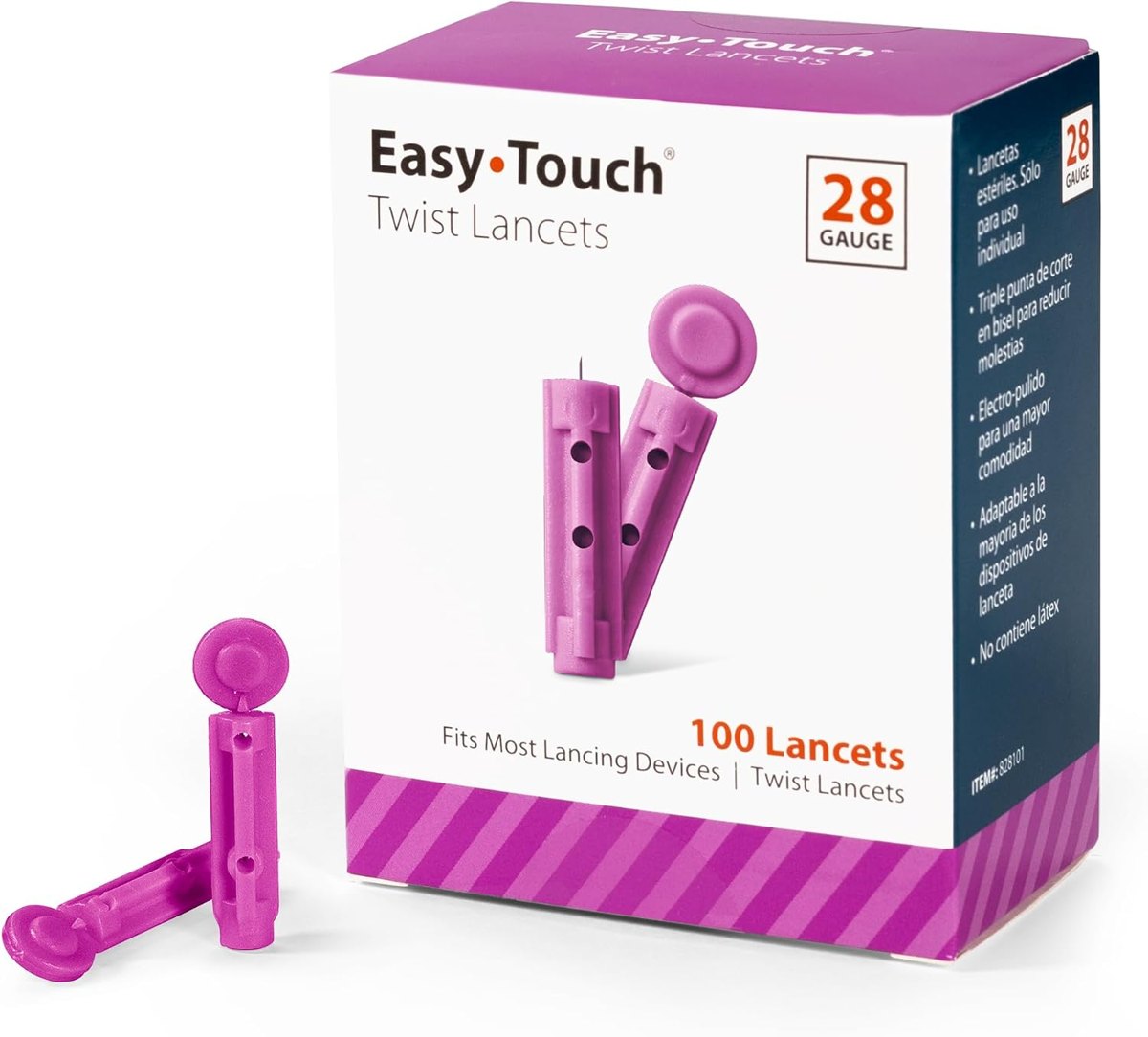
EasyTouch Twist Lancets 28G, 100 Count
100 lancets
4.7 (6,382)
$5.99 $7.00


Twist lancets color-coded by gauge, safety lancets that fire on pressure, and the lancing device that takes them. Pick the gauge for your skin, not the other way round.
100 lancets
4.7 (6,382)
$5.99 $7.00
100 lancets
4.7 (6,382)
$5.99
100 lancets
4.7 (6,382)
$5.99
100 lancets
4.7 (6,382)
$5.99
300 lancets
4.7 (6,382)
$12.99
800 lancets (8 x 100)
5.0 (7)
$29.18
100 safety lancets
4.4 (126)
$18.49
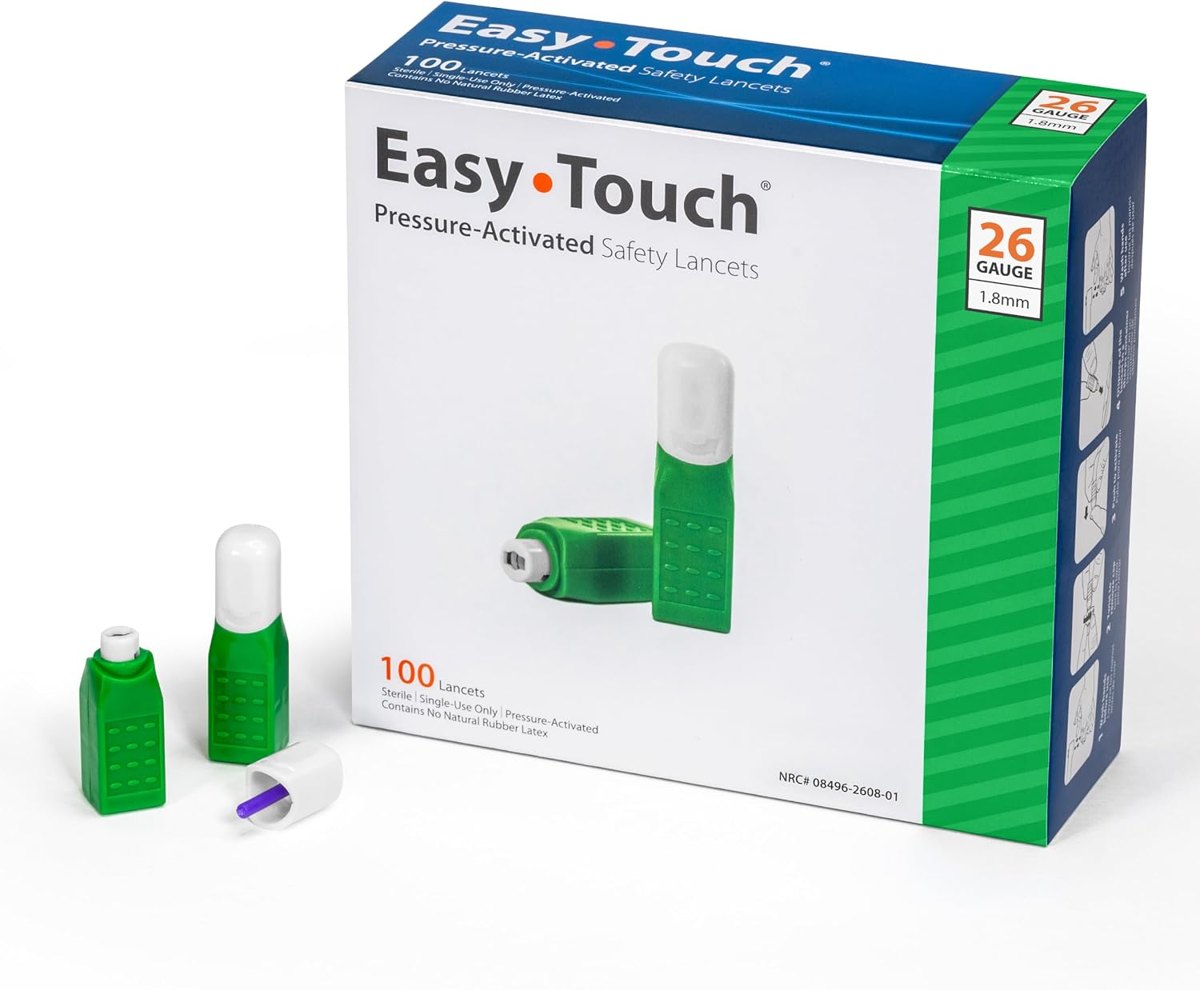
100 safety lancets
4.4 (126)
$18.49
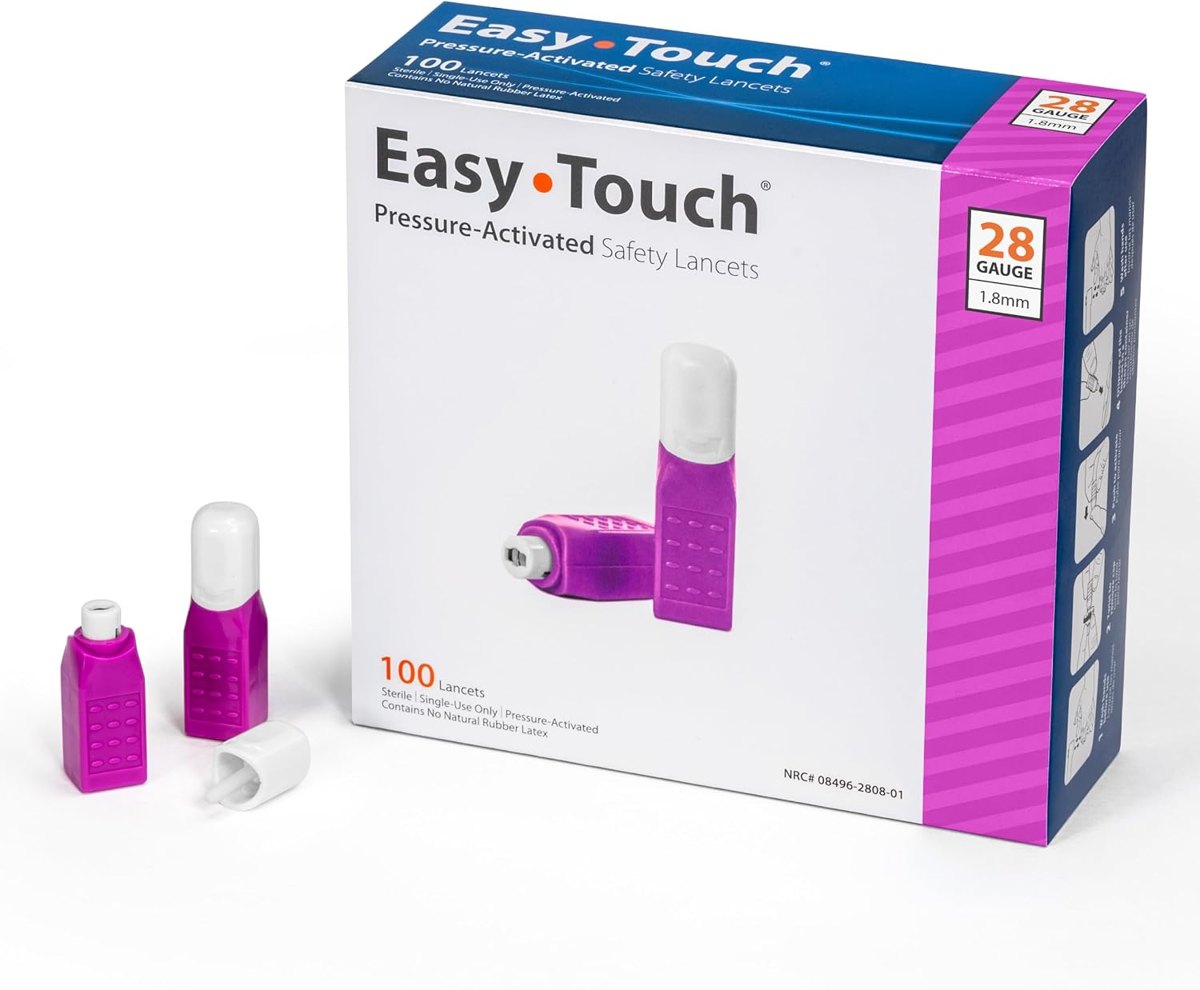
100 safety lancets
4.4 (126)
$18.49
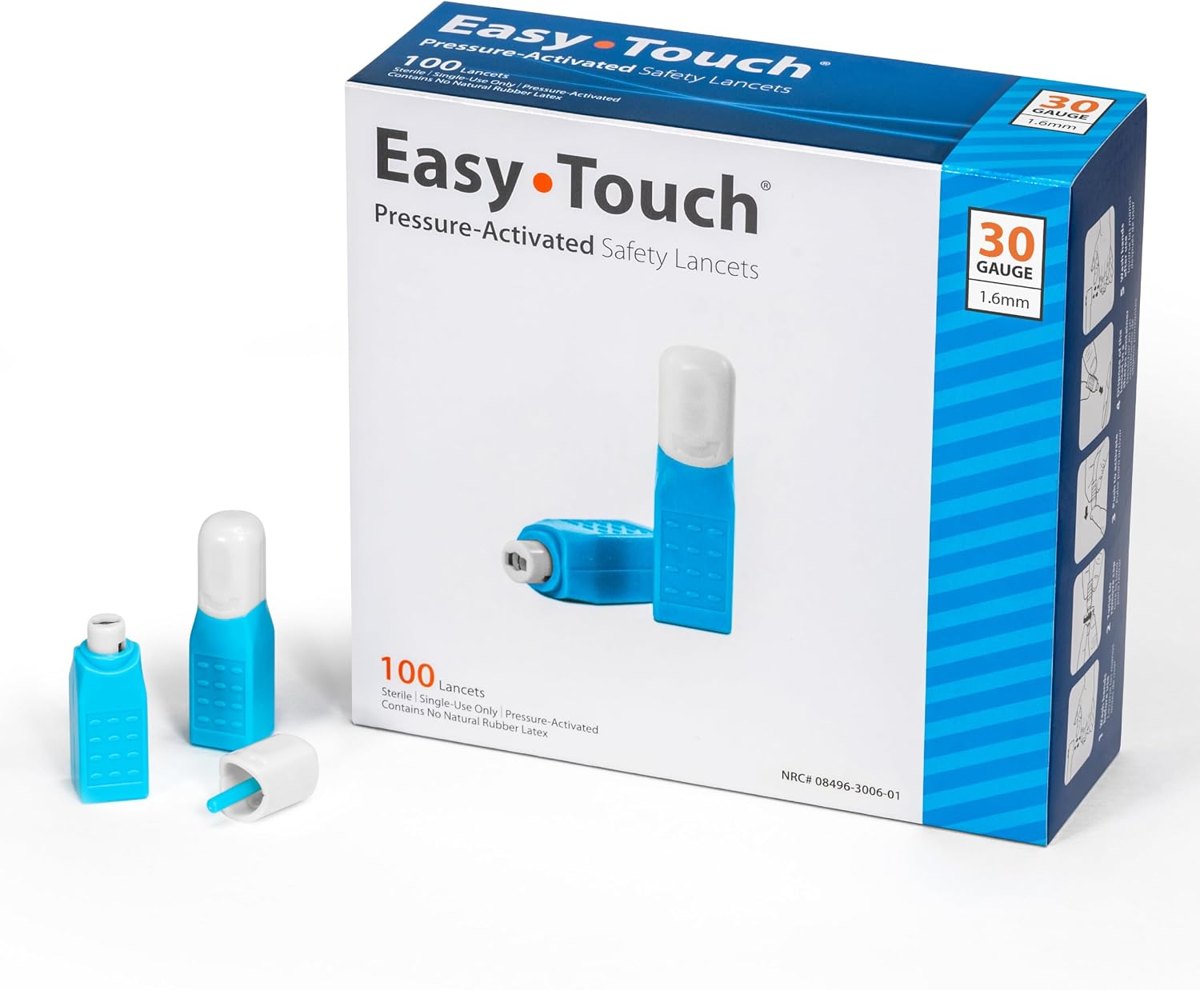
100 safety lancets
4.4 (126)
$18.49
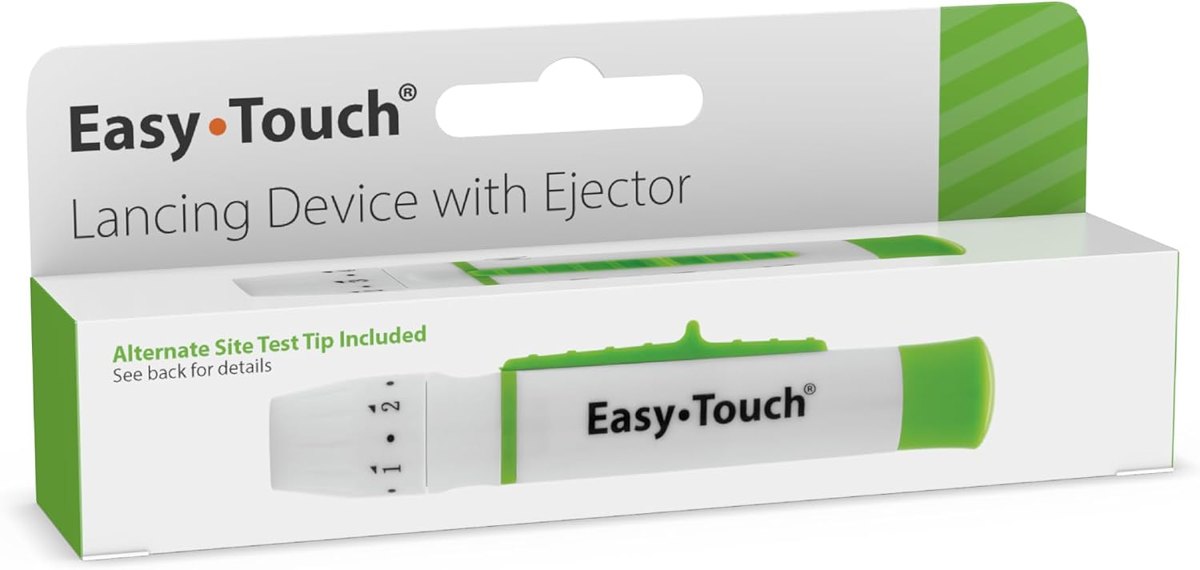
1 device
4.3 (658)
$7.19
Pick by need
| Need | The box | Buy |
|---|---|---|
| Sensitive fingertips, many tests a day | 33GTwist Lancets 33G, 100 Count 33G is the finest twist lancet |  |
| Calloused or cold fingers | 28GTwist Lancets 28G, 100 Count 28G gives a drop on the first poke | |
| Hands that struggle with loading a device | 28GPressure-Activated Safety Lancets 28G Press to fire, needle never visible | |
twist lancets and safety lancets
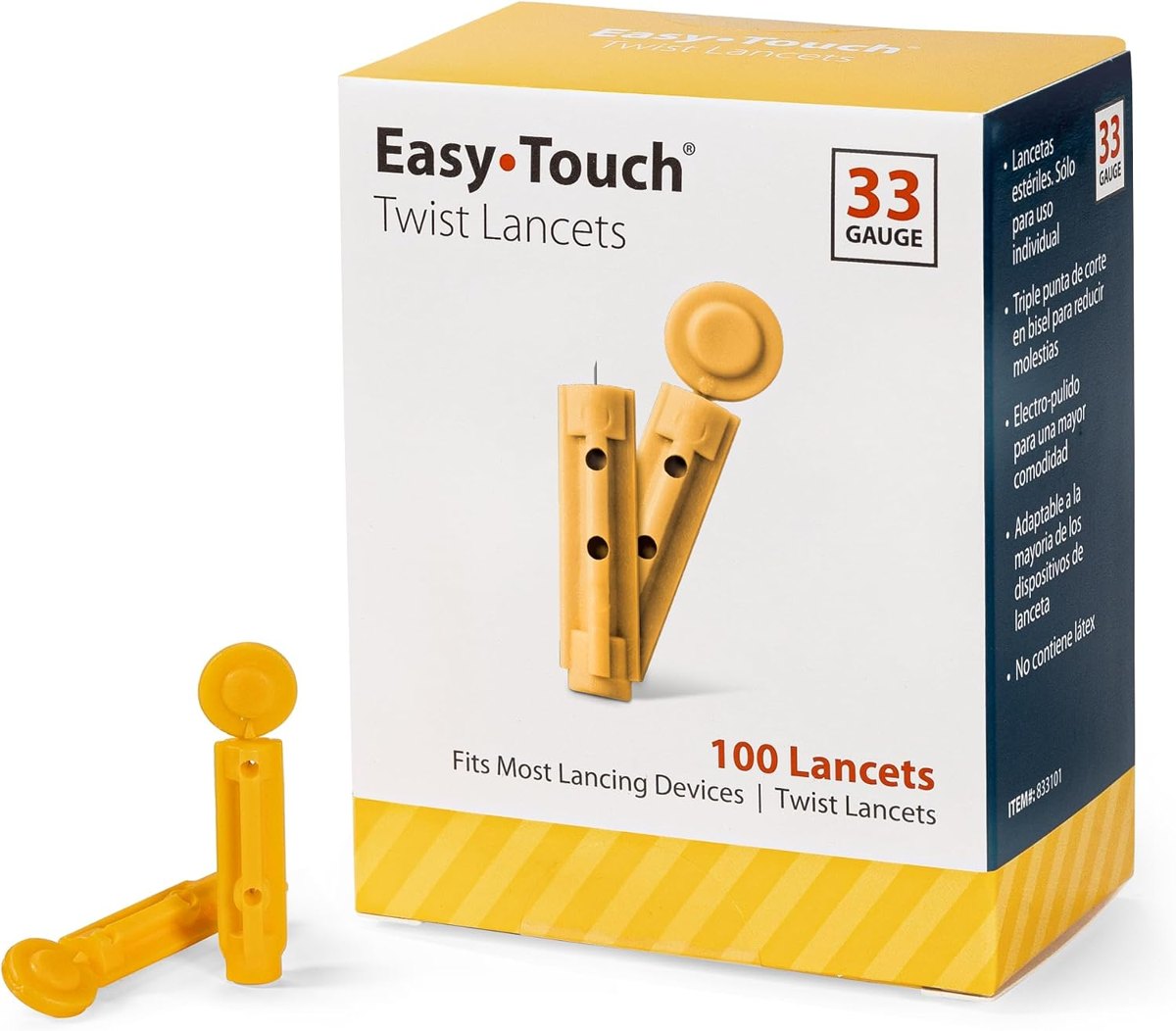
EasyTouch twist lancets are the universal kind: a sterile point under a twist-off cap that clicks into most standard lancing devices, including the EasyTouch lancing device with ejector. They come in four gauges, and each box carries its own color so a 30G box never hides among 33G refills. Gauge works backwards: the higher the number, the thinner the lancet. 28G is the sturdiest twist lancet in the range and gives the fastest drop on calloused or cold fingers; 30G is the everyday balance most testers settle on; 32G is finer for sensitive fingertips; 33G is the thinnest, chosen for children and people who test many times a day.
Every EasyTouch lancet has a triple-bevel cut. Three ground faces meet at the tip, so the point opens the skin cleanly instead of tearing it, which is what makes a thin lancet feel virtually painless and helps the site heal faster. Pair the lancet with the depth setting on your device: a fine gauge at a shallow depth is the gentlest combination, and if no blood comes, raise the depth a notch before you change gauge.
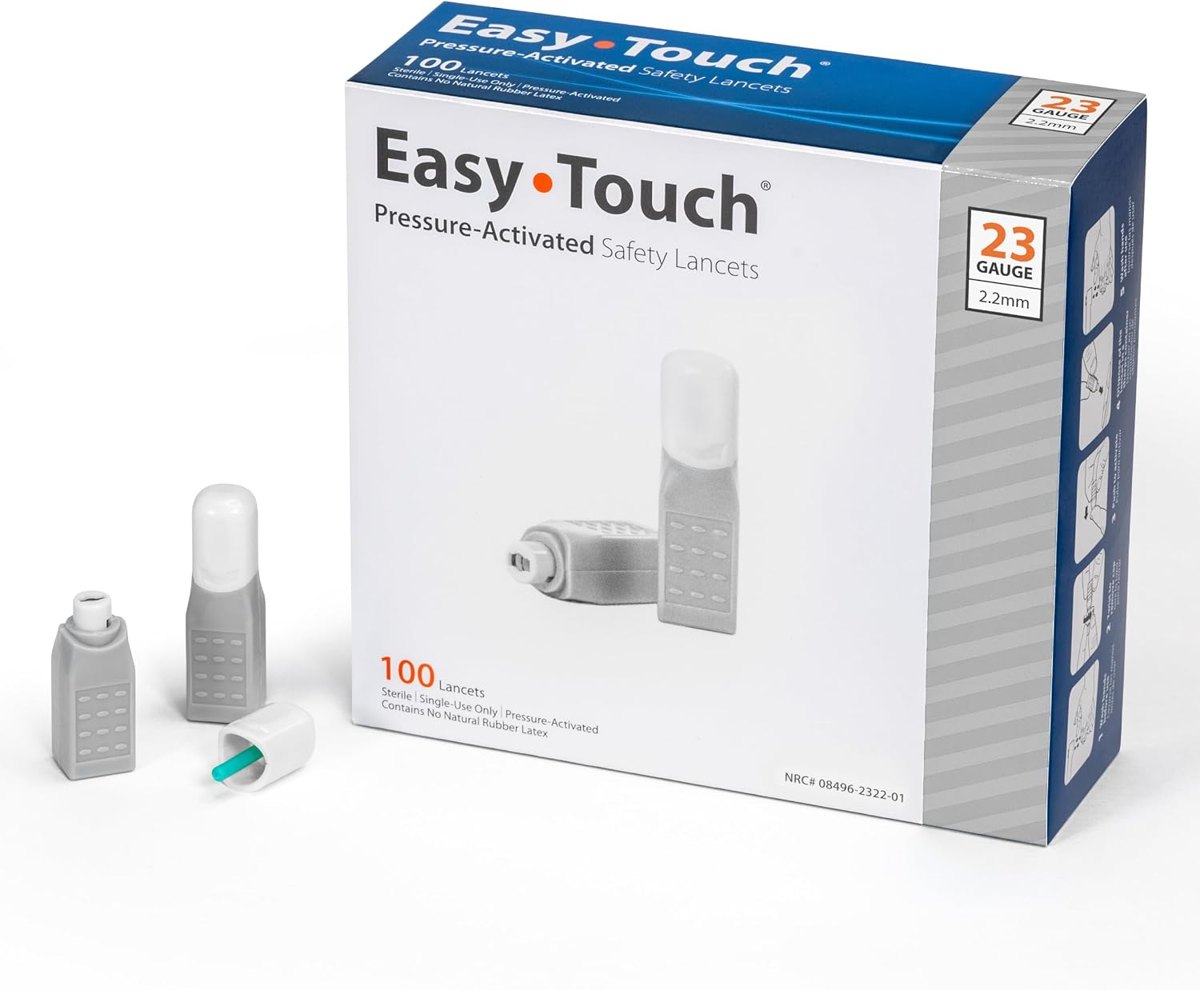
Pressure-activated safety lancets are a different tool. There is no device to load: press the lancet against the site and it fires once, then the needle retracts and locks. The point is shielded before and after use, so it suits caregivers, clinics and hands that struggle with a spring-loaded pen. EasyTouch safety lancets come in 23G for a larger sample, 26G, 28G and 30G, the finest of the four.
Use twist lancets with a lancing device when you test yourself several times a day: the device controls depth and the lancet cost stays low. Choose safety lancets when someone else does the test, in shared care settings, or when loading a device is hard. Both kinds are single-use; a used lancet is dull and no longer sterile, so change it every test and drop it into a sharps container.
Lancets for pets are a separate family: the EasyTouch Vet twist lancets in 26G and 28G and the vet lancing device with five depth settings live in the EasyTouch Vet line.
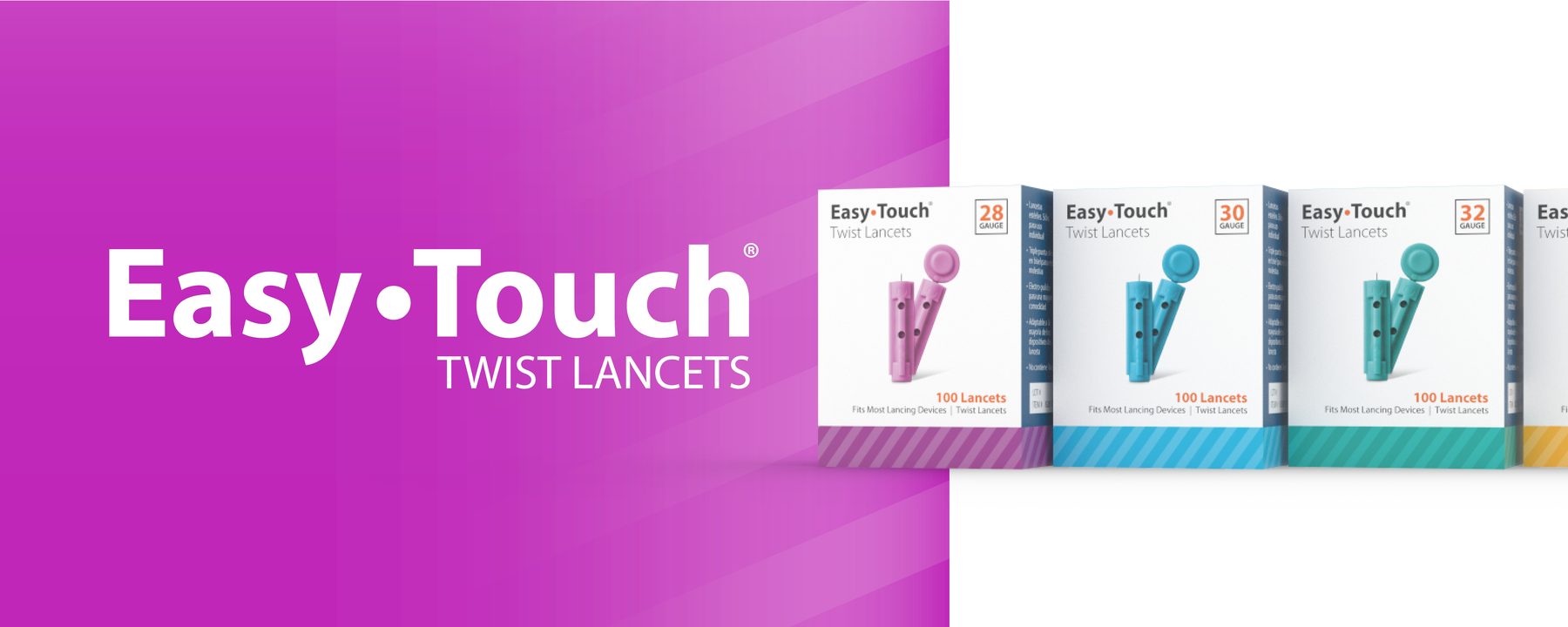
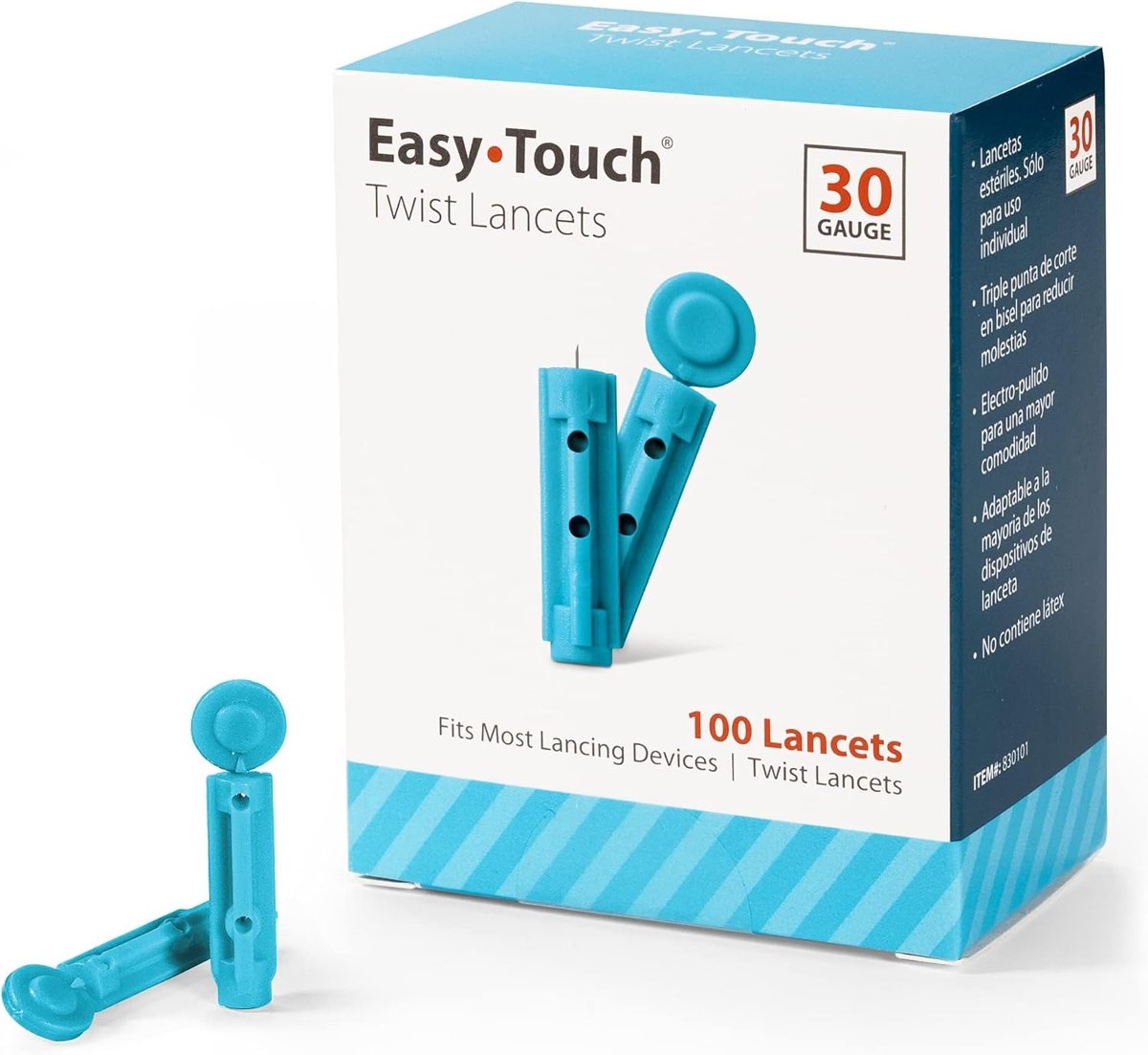
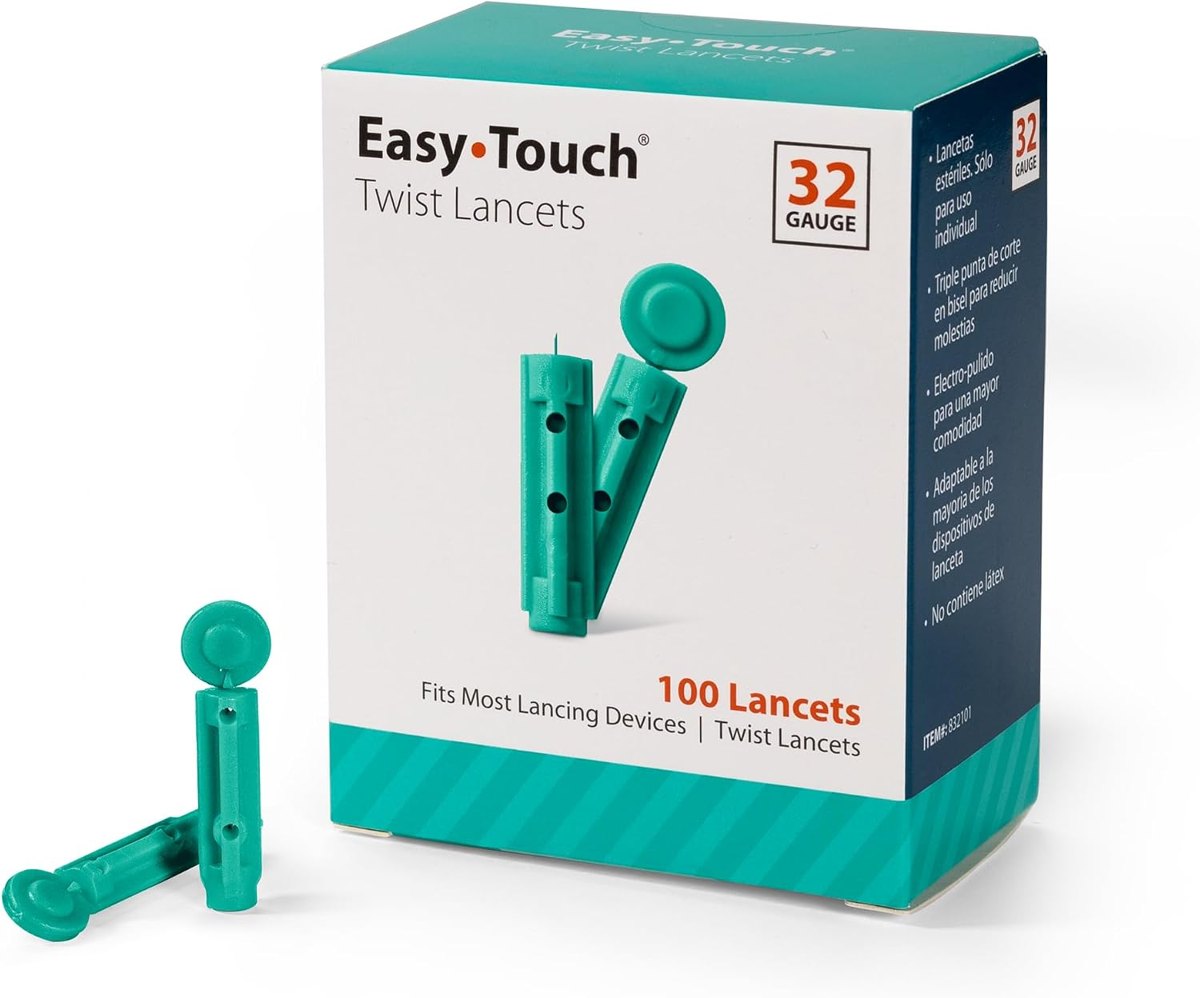
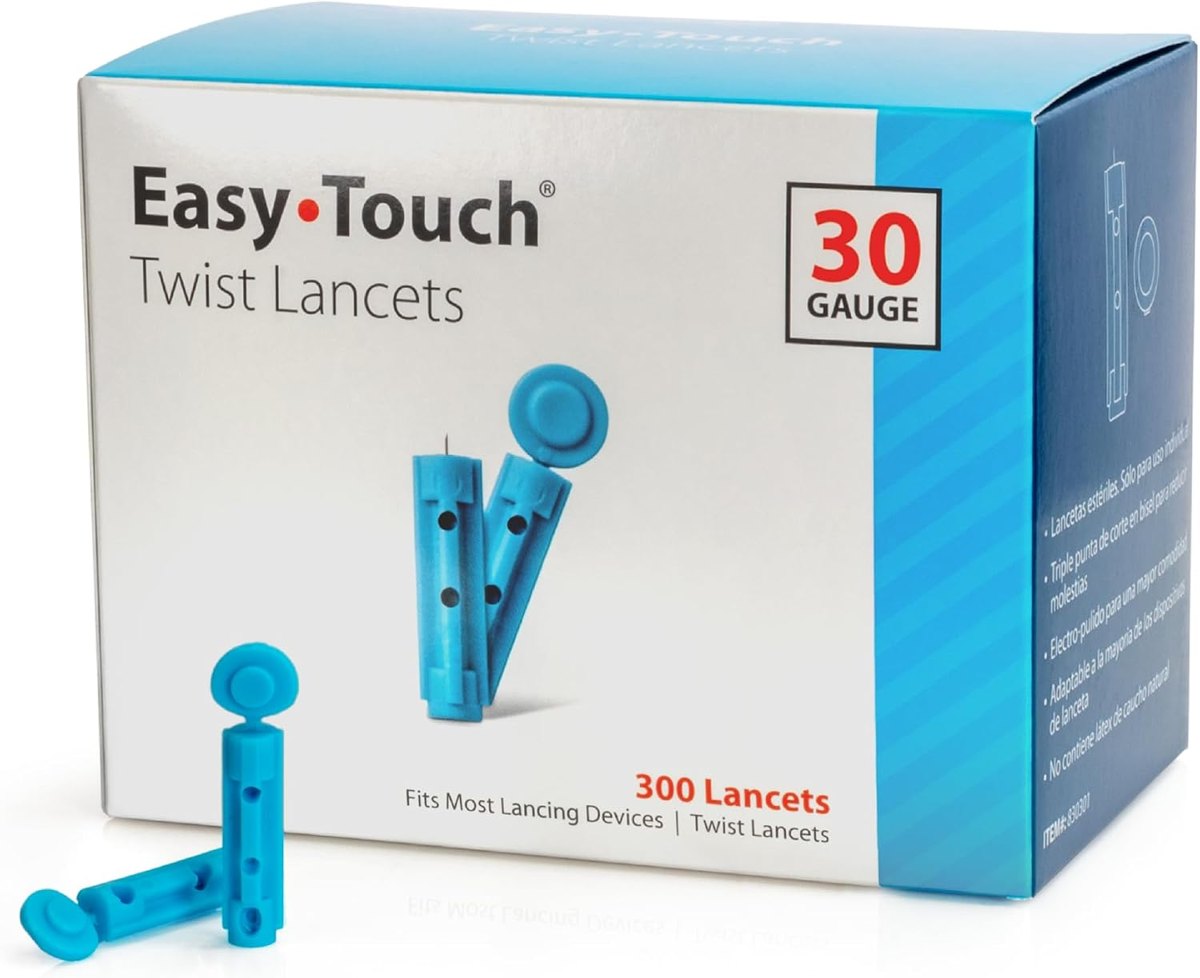
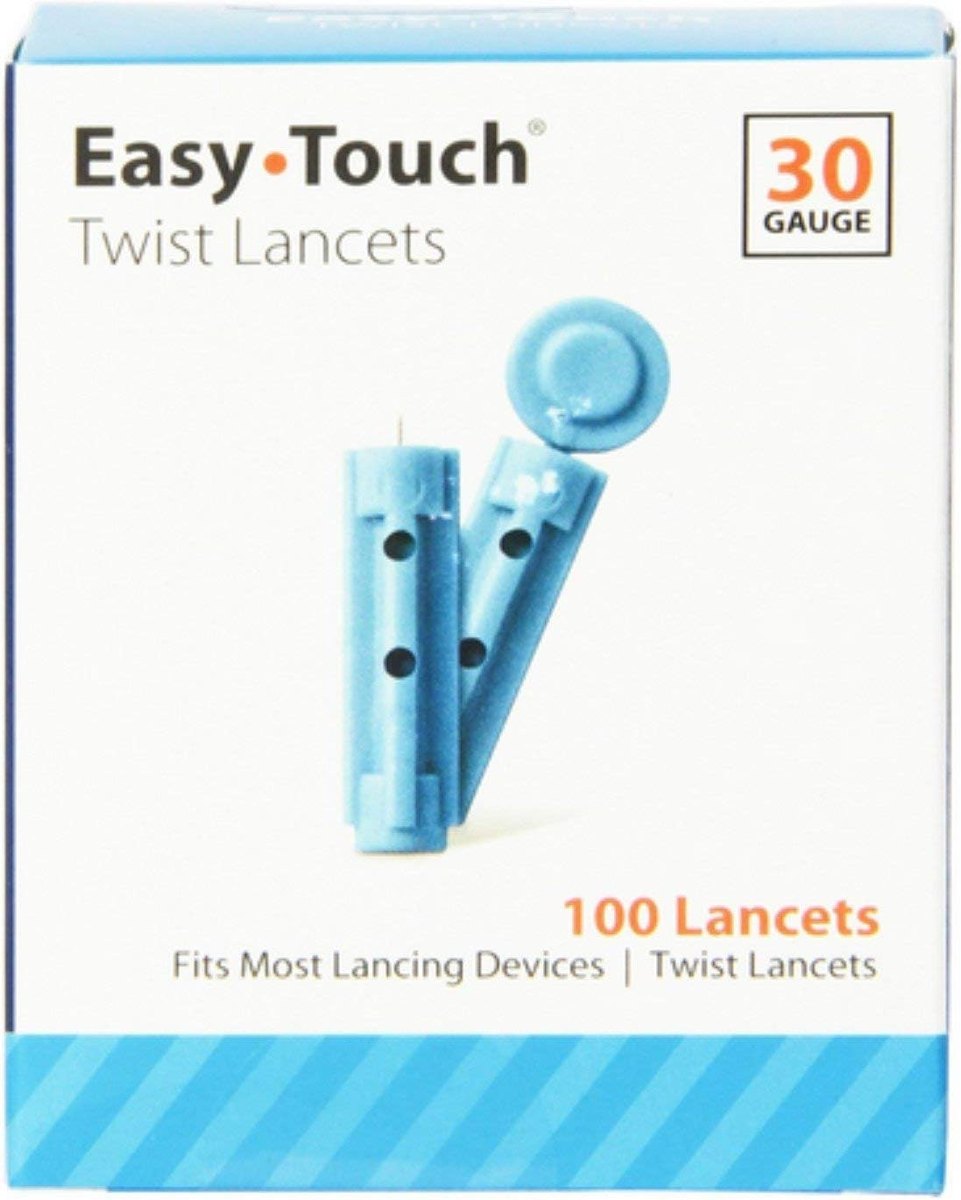
EasyTouch twist lancets come in four gauges and four colors. The 28G box is magenta, the 30G box is blue, the 32G box is teal and the 33G box is yellow, and the cap of every lancet matches its box. That color coding is the original reason the brand chose its look: you can tell a 30g refill from a 33g one in a dim drawer without reading the label.
The everyday choice is EasyTouch twist lancets 30g. It is the gauge most testers settle on, and it comes in three package sizes: a box of 100, a box of 300 and a pack of eight boxes. If you are not sure which gauge you want, a variety of one box each of 30g, 32g and 33g is a simple way to compare.
A twist lancet is called universal because its body fits most standard lancing devices, not only the EasyTouch pen. Twist off the cap, push the lancet in until it seats, set the depth and fire. Each EasyTouch twist lancet is sterile and single use, sealed under its own cap until the moment you remove it.
The EasyTouch lancing device with ejector is designed for these lancets: adjustable depth, vibration control for comfort, and an ejector so a used lancet goes into the sharps container without touching your fingers.
A good lancet is the first step of an accurate glucose test. The sample has to be large enough for your test strips, so the most comfortable lancet is the one that gives enough blood on the first try. EasyTouch glucose meters need only about 0.5 microliter, which is why fine 32g and 33g lancets work well with them.
The triple-bevel tip keeps sampling virtually painless and the puncture small, which helps fingertips stay soft over years of testing. For questions about which gauge suits your skin, our FAQ answers the common ones.
28, 30, 32 and 33 gauge. 30G also comes in a 300 box and an eight-box pack.
They are standard twist lancets and fit most common lancing devices.
Use a finer gauge, the shallowest depth that gives a drop, the side of the fingertip and a fresh lancet every time.
No. Pressure-activated safety lancets are self-contained and fire when pressed against the skin.