Count on it
Testing your dog's or cat's blood glucose at home
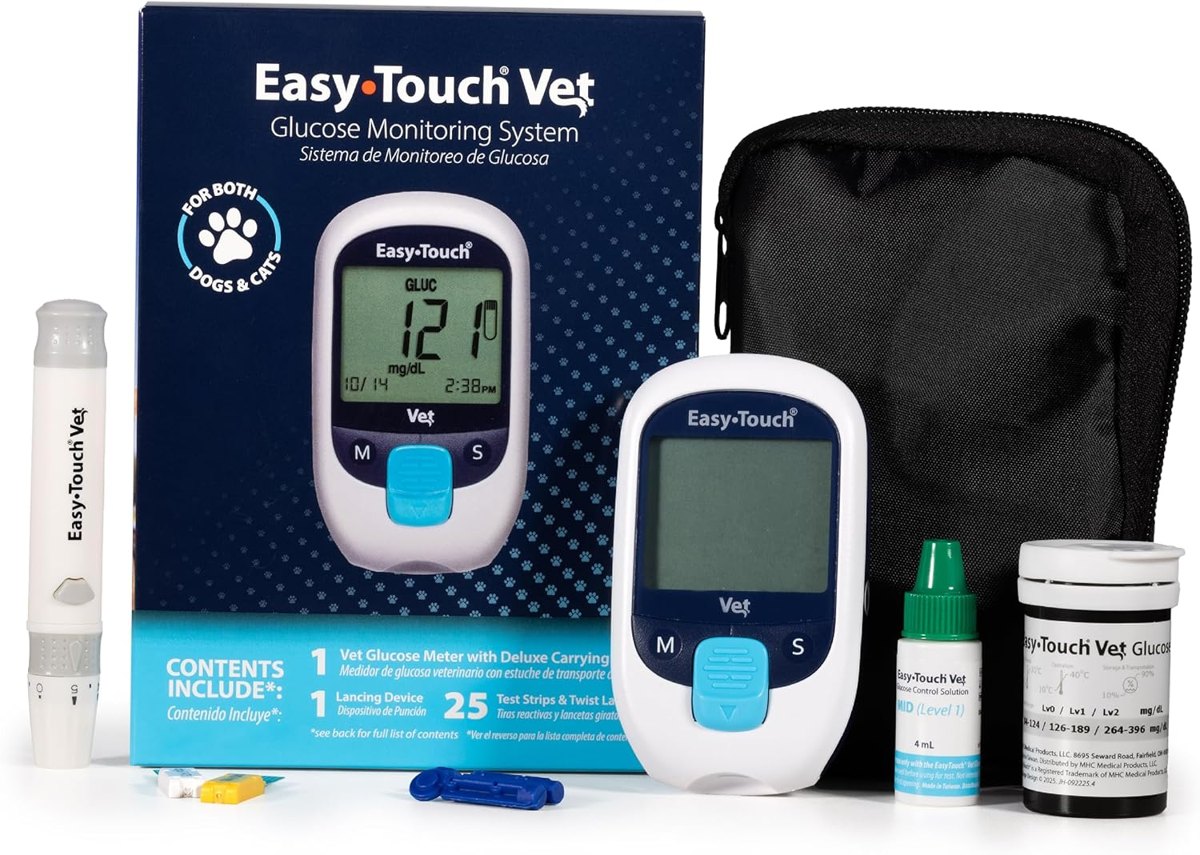
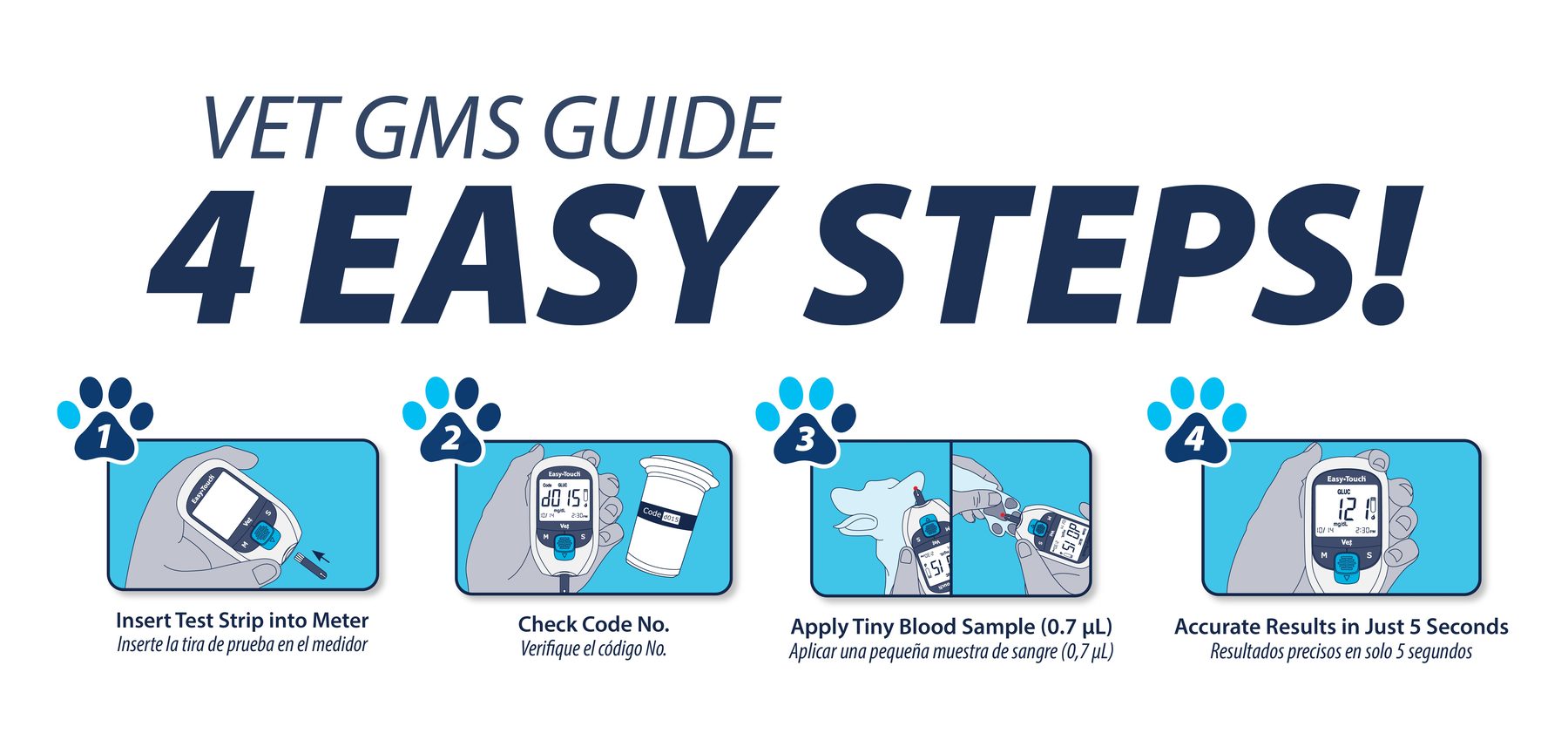
Home glucose checks give your veterinarian the numbers they need between visits, and many pets accept them within a week. Here is how to do it with the EasyTouch pet glucose monitoring system.
Why use a pet glucose meter
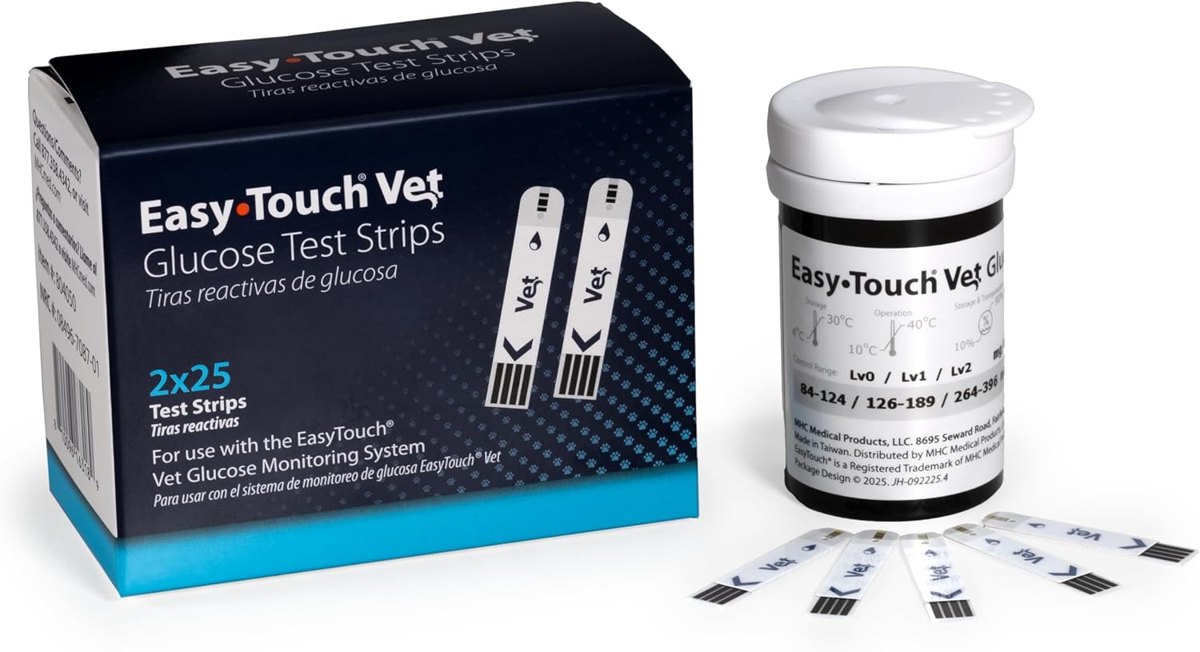
Dog and cat blood is distributed differently from human blood, so a meter calibrated for people can read pets inaccurately. The EasyTouch pet meter comes with two code chips, one for dogs and one for cats, and needs a 0.7 microliter sample, a drop smaller than a pinhead.
Where to take the sample
- The edge of the ear: the most common site for cats and many dogs
- A paw pad: useful for dogs with thick ear skin
- The inner lip: some dogs tolerate it well
Warm the site first with your fingers or a warm cloth; blood comes up faster and you need less depth. Ask your veterinarian to show you once.
Lancet and depth
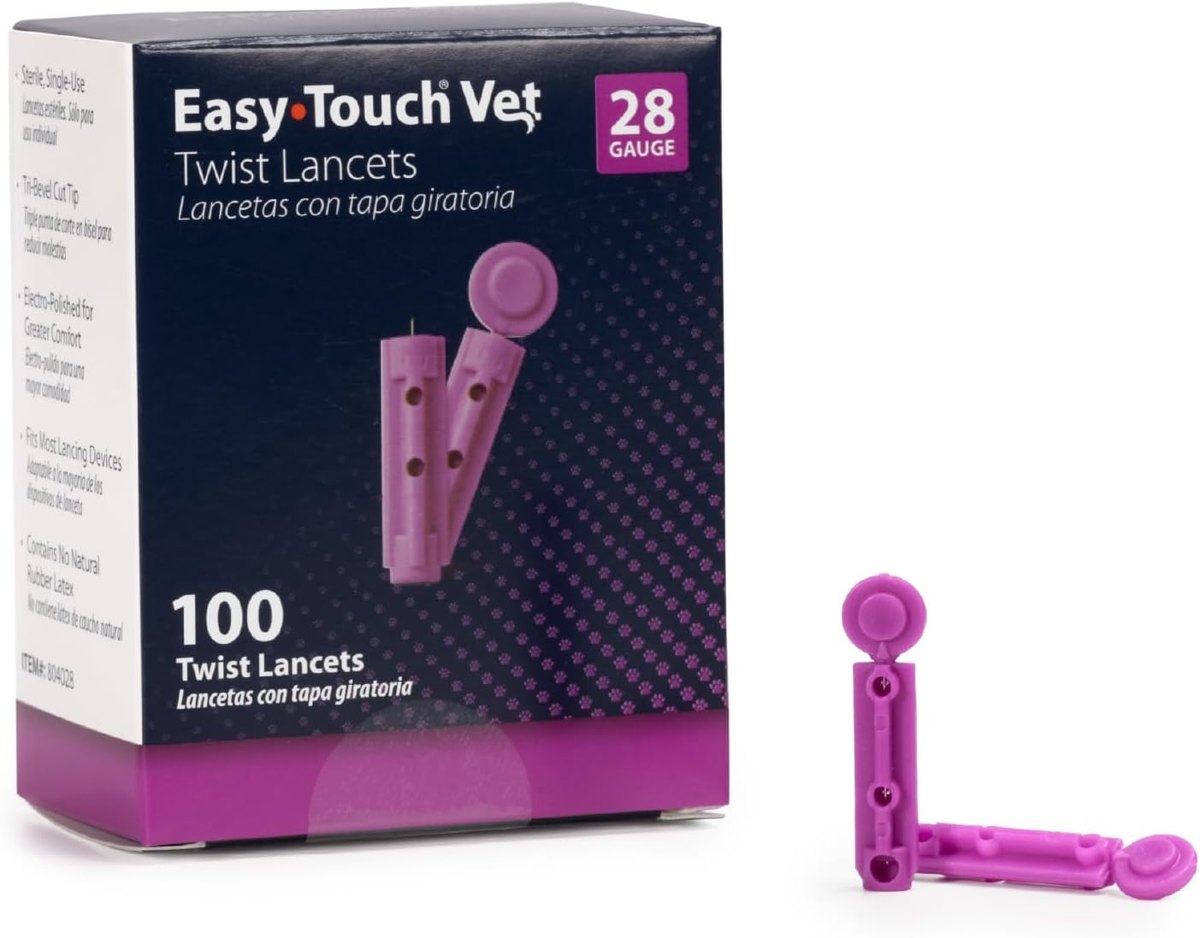
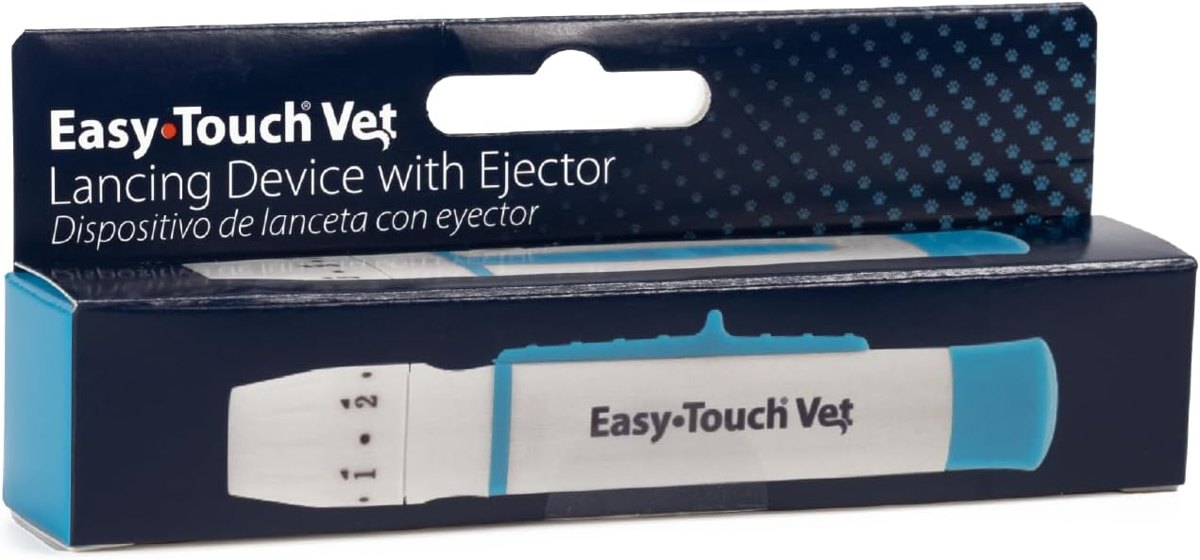
Start with a 28 gauge EasyTouch Vet twist lancet for cats and sensitive pets, and a 26 gauge for dogs that bleed slowly. Set the vet lancing device to a shallow depth and raise it half a step at a time. The device has five depth settings with half-marks, vibration control and an ejector.
Glucose curves
A glucose curve is a series of readings, often every two hours across a day, that shows how your pet responds to each insulin dose. Your veterinarian reads the curve to adjust treatment. Never change the dose yourself based on one number, and call your vet if your pet seems weak, wobbly or unusually lethargic.
Keeping it calm
Test in the same quiet place, at the same time, with a reward afterwards. Keep the session short, and have everything laid out before you pick up the pet: meter with strip inserted, loaded lancing device, cotton ball and treat.
This guide explains products and general practice. It is not medical or veterinary advice.